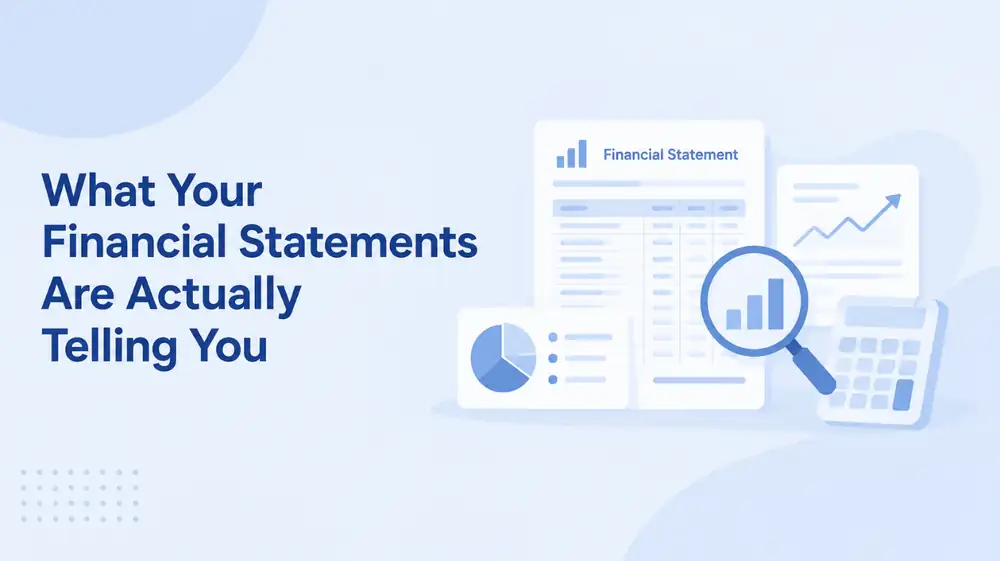
A profit and loss account and a balance sheet look finished the moment they are printed. Reading what they actually say is a separate skill, and most founders build it under pressure rather than before they need it.
Why the number on the screen and the number in your head disagree
A founder checks the bank balance most mornings and treats it as the truth. It is real money, sitting in a real account, and it moves when something happens. A profit and loss account feels less trustworthy, because a business can show a profit for the month and still hold less cash than it started with. Neither number is wrong. They are answering different questions, and most of the discomfort around reading financial statements comes from expecting one to answer the other’s question.
What a profit and loss account is actually measuring
A profit and loss account measures activity that happened in a period, whether or not cash has moved yet. Revenue is recorded when it is earned, usually when an invoice goes out, not when the customer pays. A cost is recorded when it is incurred, not when the bill is settled. This is why a business can invoice a large client in March, record the revenue in March, and still be waiting for the payment in May. The profit and loss account did its job correctly. The bank balance is telling a later, separate story about the same invoice.
What a balance sheet is measuring, and why it gets skipped
A balance sheet is a snapshot, not a period. It shows what a business owns and owes on one specific date, rather than what happened over a stretch of weeks. Most founders read it less often than the profit and loss account, partly because it does not map cleanly onto a question like “did we make money this month”, and partly because unpaid invoices, supplier balances and loan repayments sit there quietly until someone goes looking. A balance sheet is usually where a business finds out it owes more than it thought, and it tends to find out before the profit and loss account would have shown any sign of it.
A profit and loss account measures activity in a period. A balance sheet measures a moment. A founder checking one against the other is asking two different questions, not catching an error.
Why a correct figure can still mislead
The gap between an accurate number and a useful one is usually timing. An accrual for a cost incurred but not yet billed, a prepayment spread across several months, a customer who pays sixty days late as a matter of habit: each of these can leave a monthly figure technically right and directionally confusing. A margin that looks strong in one month and weak in the next is not always a real swing in the business. Sometimes it is one invoice landing a few days on either side of a month-end cutoff. The number did not lie. It was simply never asked to account for timing, and nobody told the reader to check.
Reading the ledger instead of waiting for the report
Part of why this gap is hard to catch is structural. In many entry-level tools, a founder’s real question, such as what a project actually cost or how much the business currently owes, requires pulling data into a spreadsheet before it can be answered. By the time that export is built, the numbers are already a few days old, and whatever timing quirk caused the confusion has usually been forgotten by the time anyone checks.
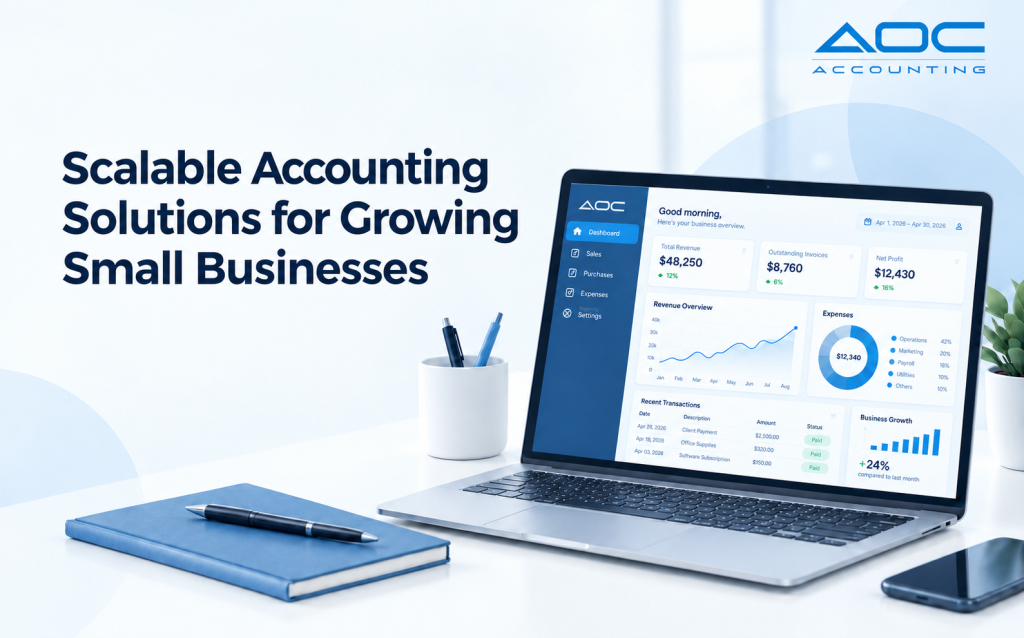
AOC Accounting holds AP, AR and GL in one ledger, so a founder reads a live view of the entries as they stand rather than a report rebuilt from an export. Up to 10 analysis dimensions per function mean a transaction can carry its project, department or customer tag from the moment it is entered, and reports are available immediately. That does not change what a profit and loss account or balance sheet measures. It changes how current the read is by the time a founder goes looking for the answer.
What this does not fix
None of this teaches accrual accounting on its own. A founder still has to learn that revenue and cash are not the same thing, and no system explains that difference the first time someone reads a report and finds it confusing. Immediate reporting also does not decide which numbers matter for a particular business; a five-person agency and a twenty-person distributor should be watching different figures, and that judgment stays with whoever runs the business or advises it. What changes with better structure underneath the reports is how quickly a real question can be checked, not whether the person asking already knows what to look for.
Two reports, one invoice
Take one invoice a business raised last month, a real one, still sitting partly unpaid. Find it on the profit and loss account, where it shows as revenue earned on the day it was issued. Then find the same invoice on the balance sheet, where the unpaid balance sits as money owed to the business. Two reports, two different things to say about one document, both true at the same time. A founder who can trace that single invoice through both statements has learned more about reading financial statements than a glossary of accounting terms would teach in an afternoon.
Trace one invoice through both statements
Bring a part-paid invoice to a walkthrough and follow it from the profit and loss account to the balance sheet in one ledger.
Explore Other Insights