Scalable accounting software handles more transactions, more entities, and more currencies without requiring you to hire proportionally more people or rebuild your process from scratch. For Singapore small businesses growing between 2024 and 2026, this definition has moved from “nice to have” to “non-negotiable.”
Singapore SMEs and startups that outgrow basic bookkeeping tend to hit the same pain points: manual spreadsheets that break at 50 transactions a month, legacy software with too many form fields nobody uses, no reliable way to track expenses across projects, and a lack of user friendly tools that grow with the business.
This article covers the principles of scalable accounting, user friendliness in finance tools, multi-entity and multi-currency operations, and how AOC implements them in practice.
What you will learn
- What “scalable” actually means for accounting
- How to build a finance stack that grows with your business
- Practical steps from bookkeeping to consolidated reporting
- How to manage expenses, data capture, and multi-currency operations at scale
- How AOC partners with clients to create future-proof accounting systems
1. What Does “Scalable” Mean in Accounting
At its core, scalability refers to a company’s ability to grow revenue faster than operating costs. In accounting, this translates to systems, processes, and software that handle growth in transaction volume, entities, currencies, and reporting complexity without a proportional increase in cost or headcount.
Consider a concrete example. A Singapore F&B outlet in 2020 tracks sales, costs, and stock via spreadsheets. By 2026, it expands into multiple outlets across Malaysia and Indonesia. Suddenly it needs multi-currency handling, intercompany charges, different GST and VAT rules, and consolidated reporting. The original system breaks. Reconciliations get delayed, duplicate entries pile up, and audit risk climbs.
Scalable accounting software adapts to business growth needs like this. Here’s what “scalable” means in practical terms:
- Not just software licenses. It’s also about workflows, chart of accounts design, and tax planning structures that still work when the business doubles or triples in size.
- Compliance-ready by default. In Singapore, IRAS places strict requirements on accuracy of records – estimates are not acceptable, and businesses must retain supporting documents for five years. Non-scalable setups increase audit and penalty risk.
- Revenue-aligned growth. Successful scalability allows a company to expand into new markets or increase sales without major structural changes to the finance function.
- Surge-capable. A scalable business model can handle surges in workload without proportional increases in resources – critical during peak seasons or rapid expansion.

2. Principles of Scalable Accounting Software: Emphasizing User Friendliness
Think of your “finance stack” as the combination of accounting software, expense tools, payroll, and reporting – all designed for scalability and user friendliness. Scalable accounting software lets you add components as your business grows, rather than ripping everything out and starting over.
Here are the core principles:
- Modular architecture. Start with what you need today – invoices, bank reconciliation, GST filing. Add inventory, payroll, or POS modules later without rebuilding.
- API-first and integrable. Your tools need to be connected. Without integrations between bank feeds, POS systems, expense apps, and CRM, data silos create bottlenecks that don’t scale.
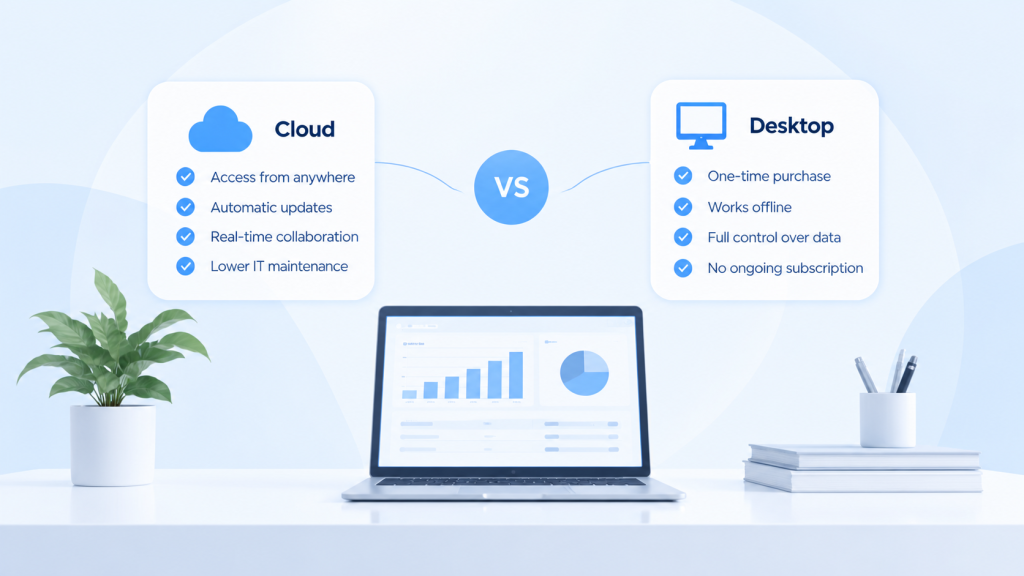
- Cloud-based with strong security. Cloud systems protect sensitive data through automated backups, access control, and security patches, while enabling remote access from any device – whether you’re using Chrome, Safari, or Firefox in your browser.
- Designed for non-accountants. User friendly products are easy to learn and satisfying to use. The concept of user-friendly design originated in human-computer interaction during the 1980s, and ISO 9241-11 defines usability as effectiveness, efficiency, and satisfaction. Staff should be able to raise invoices or track expenses with minimal training.
- Accessible and error-preventing. Accessibility is a key principle of user-friendly design. Good design prevents errors and provides clear recovery paths – reducing costly mistakes as transaction volumes grow.
A concrete example: a retail shop in Bugis adds an online e-commerce channel. It needs its POS and e-commerce orders to sync with accounting in real time, including inventory changes and sales tax. With a modular, integrable stack, this is a plug-and-play addition – not a six-month IT project.
3. Designing Scalable Processes: From Bookkeeping to Consolidated Reporting
Scalable accounting software is only half the answer: scalable accounting is as much about process as it is about software. The best tools in the world won’t save you if your chart of accounts is a mess or your month-end close depends on one person’s memory.
At AOC Accounting, we help clients move from ad-hoc record keeping to structured processes that still work when the company opens a second or third entity. Here’s what that looks like:
- Standardized chart of accounts. Separate cost centres, branches, and intercompany accounts from day one so consolidation is possible later. Standardized processes help maintain consistent quality and performance as a company grows.
- Monthly closing checklists. Bank reconciliation, expense accruals, review of line items – having a repeatable process ensures month-end is reliable even when the team changes. Scalable systems prevent operational disruptions during high-demand periods by standardizing workflows.
- Defined approval flows. For expenses, invoicing, and payroll, multi-step approvals with role-based access reduce errors, prevent misuse, and create an audit trail.
- Automated workflows. Bank feeds that import transactions automatically, rules for categorizing recurring vendor payments, recurring journals for payroll and rent, and automated GST computations for quarterly F5 submissions to IRAS.
Effective documentation of workflows simplifies the training of new employees and ensures consistency across the team. When you can hand a new hire a checklist on their first date and have them contributing within days, that’s scalability in action.
Multi-entity consolidation example: A Singapore holding company owns subsidiaries in Malaysia (MYR) and Indonesia (IDR). Each entity has local statutory reporting. The board needs a consolidated P&L and balance sheet in SGD. This requires mapping exchange rates, handling unrealised gains and losses, eliminating intercompany transactions, and aligning financial periods – all of which must be built into the process, not bolted on later.
4. Making Expense Management Scalable: How to Track Expenses from Receipts to Real-Time Insights
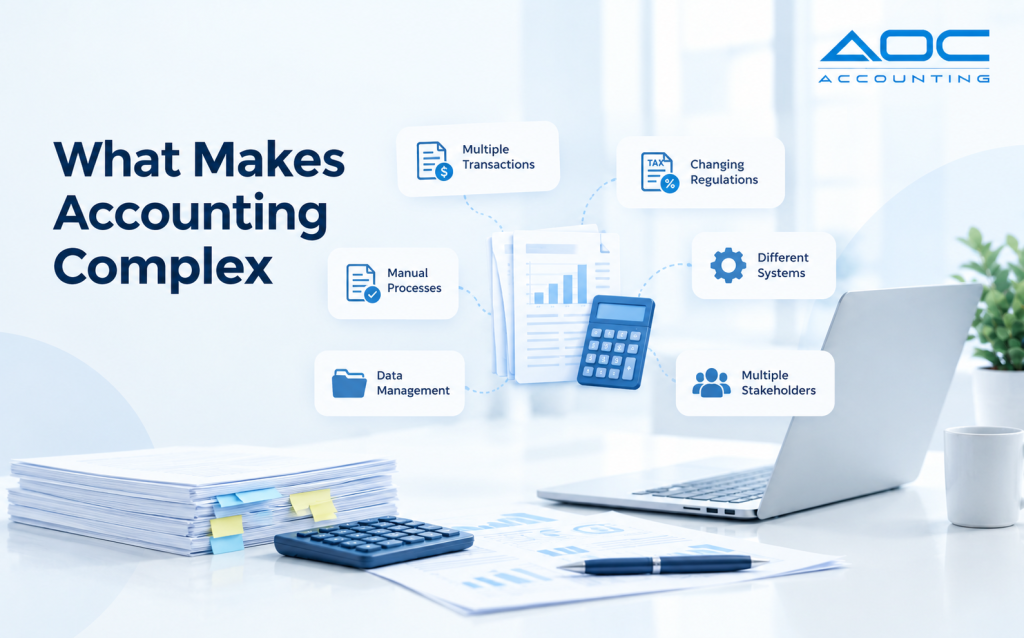
Manual reimbursement spreadsheets work when you have five employees. Once you grow beyond 10–15 staff or open multiple locations, delays mount, receipts go missing, approvals get congested, and cross-location expenses become impossible to aggregate.
Automation reduces the need for staff to manually perform repetitive tasks. Modern expense tools solve this with:
- Mobile receipt capture. Staff snap a photo, and OCR reads the vendor, date, and amount. Apps sync directly to the ledger.
- Smart categorisation. Expenses link to the correct chart of accounts and GST fields automatically. Categories tied to form fields ensure clean data from the start.
- Multi-currency capture. Construction teams on site in Malaysia can capture fuel costs in MYR. Sales teams on trips across SEA can file claims in USD or local currency.
- Approval workflows. Employee submits → manager approves → finance reviews → posts to ledger with GST extracted automatically.
Businesses can improve cost efficiency by automating workflows and reducing duplicated work. AOC helps clients choose expense management tools that integrate with their core accounting software, set up approval workflows, and map categories so that every page of financial reporting stays clean – no extra disposal of messy data at month-end.

5. Smart Forms and Data Capture: Reducing Form Fields While Improving Accuracy
Legacy accounting systems often force users through clunky forms: vendor name, address, vendor code, item codes, department, project, cost centre, tax codes, purchase order number, GL account – many fields unused or duplicated. This isn’t just annoying; it doesn’t scale. Every unnecessary field is a potential source of errors, and those errors compound as volume grows.
Best practices for scalable data capture:
- Show only essential form fields. Secondary fields should be hidden or conditional – cost centres appear only when relevant, and teams should test a redesigned form with real users before rolling it out widely.
- Defaults and templates. If you regularly pay the same supplier, the GL account, GST code, and cost centre should auto-fill from the vendor record.
- Validation rules. Mandatory fields, warnings when GST codes mismatch, checks for duplicate invoices or mismatched words in key text fields – all free the finance team from manual review.
- Before vs after impact. A Singapore SME redesigned its vendor bill entry form, giving one of the clearest examples of what better setup looks like: main screen shows supplier (auto-search), date, amount (auto-currency), category, and tax field auto-set from the supplier record. Optional fields for project and PO number scroll into view only when needed. Result: data entry time dropped, fewer corrections, and consistency improved.
Cleaner, more structured data means less time spent counting back to correct categories. It makes consolidated multi-entity financial reports and accurate tax computations easier downstream – without extra clean-up work. When you discover how much money you save by preventing bad data at the point of entry and keeping record contents clean and structured, the value of smart form design becomes obvious.
6. Scalable Accounting Software Across Entities and Currencies
Singapore SMEs expanding into Malaysia, Indonesia, Vietnam, or Thailand between 2023 and 2026 quickly hit a wall: different base currencies, local tax rules, exchange rate fluctuation, and the need for group-level reporting. Scalable solutions can handle multi-currency transactions efficiently – but only if the system is designed from the start to keep processing efficient with less manual effort. For example, businesses offering digital products or subscriptions often need accounting setups that scale cleanly across entities and currencies as they enter regional markets.
Here’s what a scalable multi-entity setup requires:
- Independent entity operations. Each subsidiary maintains its own chart of accounts, fiscal period, local regulatory submissions, and local currency. This structure can support local teams while preserving group-level consistency.
- Shared master data. Vendor, customer, and product records can be shared across entities to reduce duplication and keep everyone on the same page. The software should also integrate with digital products so revenue data flows cleanly across entities, and teams can sign related PDF approvals without breaking the audit trail.
- Intercompany transaction handling. Due-to and due-from accounts, intercompany profit elimination, and matching fields for reconciliation.
- Group consolidation. Converting subsidiary financials at monthly FX rates, handling unrealised vs realised gains and losses, and generating consolidated reports in SGD or USD.
Concrete example: A Singapore tech startup has entities in Singapore (SGD), Indonesia (IDR), and the US (USD). Local subsidiaries file local taxes and operate in local currencies. Investors need monthly consolidated P&L and balance sheet in SGD. The system fetches FX rates, converts subsidiary financials, adjusts for intercompany transactions, and generates consolidated reports – while local entities run day-to-day independently.
Business agility is enhanced by scalable systems, allowing quicker adaptation to market changes. AOC’s role in these scenarios includes designing the entity structure for tax optimisation, setting up the software with mapped intercompany accounts, and ensuring IRAS-compliant reporting for the Singapore parent – including correct mapping to PDEs for seamless filing.
Ready to learn how your current systems measure up?
We’ll review your current setup, assess key features in your existing system, and map a scalable roadmap tailored to your business. Contact AOC Accounting today.