
If your finance team dreads month end because bank reconciliation eats up days instead of hours, you are not alone. Here is why it happens and what you can do about it.
What Is Bank Reconciliation And Why It Matters For Growing Businesses
Bank reconciliation is the process of comparing your bank statement balance to your book balance the cash account in your General Ledger at a specific date. The two rarely match on the first pass. Outstanding cheques that have not yet cleared the bank, deposits in transit, bank fees deducted automatically, and foreign exchange differences all create timing gaps that need to be identified and resolved.
Consider a Singapore SME at end March 2026. Its accounting records show S$150,000 in a DBS current account, but the bank statement shows S$145,000. Investigation reveals S$2,000 of cheques issued on 30 March not yet clear at the bank, S$3,000 of customer payments received after the cut off on 31 March, and S$1,000 of bank fees posted in the books only in early April. Adjusting for those items brings both sides into agreement.
Getting this right quickly matters for cash flow visibility, GST compliance, and audit readiness. Singapore’s corporate tax rate is 17%, and the Accounting and Corporate Regulatory Authority handles company registration digitally meaning regulatory obligations start early for growing businesses. The Monetary Authority of Singapore oversees the banking regulatory framework, and IRAS requires proper record-keeping including bank statements and GL cash ledgers. For multi-entity or multi-currency businesses across Southeast Asia, inaccurate balances can cascade into misstated consolidations and delayed filings. Singapore has over 1,700 fintech companies as of 2025, yet many SMEs still close their books 10–15 working days after month-end, with management waiting for updated cash reports and frequent mystery differences between bank and books.
Main Reasons Bank Reconciliation Takes Longer Than It Should
Delays are rarely the bank’s fault. Most stem from fragmented processes, tools, and data inside the business.
To understand why reconciliation is complex, it helps to recognise how many banking touchpoints a growing business has. Banks act as intermediaries between savers and borrowers, profiting from the difference in interest rates. They collect money from savers and lend it to borrowers. Central banks oversee a national monetary system, manage currency, and regulate interest rates, while commercial banks cater primarily to businesses and governments providing loans and cash management services. Retail banks focus on individual consumers and provide services like checking accounts and mortgages. Investment banks help corporations and governments raise capital and provide advisory services for mergers and acquisitions. Credit unions are member owned, non profit financial institutions that often offer better rates to members, and cooperative or credit unions are generally owned by their members and provide community focused banking services. Banks provide loans and credit to individuals for major purchases and financial management. Deposit accounts include checking and savings accounts which earn interest. Banks facilitate the payments system including electronic payments and money transfers, while payment and transfer services enable global money movement through wire transfers and digital wallets. Trade finance products help businesses mitigate risks when engaging in international trade. Government deposit insurance protects personal savings against loss, and wealth management services help clients grow their assets through portfolio management and financial planning. Founders can apply for a business account fully digitally. All of these services generate transactions that eventually flow through your bank statement-and each one needs reconciling.
Against that backdrop, here are the most common internal causes of delay:
- Manual data entry. Staff key transactions from PDF or paper bank statements into Excel, then compare line-by-line with ledger entries. As of 2025, PMETs make up 64.2% of employed residents in Singapore, yet finance professionals still spend disproportionate hours on data entry that software should handle.
- Disconnected AP, AR and GL modules. When payments posted in Accounts Payable are not reflected in the General Ledger until someone runs a batch update, mismatches pile up before you even look at the bank statement.
- Timing mismatches. Journals not approved by month end, backdated bank charges, and late posting of CPF contributions, IRAS remittances, or card settlements from gateways like PayPal and Stripe all push the reconciliation window out.
- Complex bank setups. Multiple accounts across Singapore, Malaysia, Thailand and Indonesia, foreign-currency accounts in USD, EUR, THB, and MYR, plus merchant gateways each with its own statement format and FX exposure. Signing into DBS, OCBC, UOB and Maybank portals, downloading different file types, and normalising formats is tedious.
- No standardised journal types or approval workflows. Inconsistent descriptions (“bank charge” vs “bf chg”), missing references to bank transaction IDs, and no clear person responsible for sign-off mean extra time tracing who posted what.
Process And Data Issues That Quietly Slow Down Bank Reconciliation
Even with modern software, weak processes make reconciliation drag on especially in fast-growing SMEs where volume and complexity outpace routine.
Weak reconciliation routines are a silent killer. Many teams skip daily or weekly mini reconciliations and cram everything into month end. There is often no checklist maintained per bank account no step to confirm outstanding cheques, verify merchant settlements, or check cut off dates-so items slip through until someone catches them late.
Poor documentation forces staff to play detective. Customers send payments with vague references like “transfer” or “down payment” instead of invoice numbers. Remittance advices go missing. Source documents are not attached to journals but buried in email threads or shared drives. When auditors ask for evidence, it triggers a scramble.
Partial or incorrect allocations compound the problem. A lump-sum bank deposit covers three invoices but is posted as one entry. Credit notes sit unapplied. AR receipts do not match invoice amounts. Each mismatch requires manual back and forth to reallocate or adjust.
Multi-currency accounts add another layer. FX differences realised and unrealised must be calculated at month end rates. Too often, finance teams use separate spreadsheets to track exchange rates rather than letting the accounting system generate those entries, creating yet another reconciliation loop.
Audit and compliance pressure amplifies every delay. Auditors request detailed bank reconciliation schedules with supporting evidence. If records are scattered across email, paper and spreadsheets, re-performance becomes necessary. Singapore’s 2026 cloud accounting buyers’ guide flags close cycles slipping past Day 10 as a widespread issue driven by multi-entity APAC pressure and InvoiceNow adoption.

How The Right Accounting System Speeds Up Bank Reconciliation
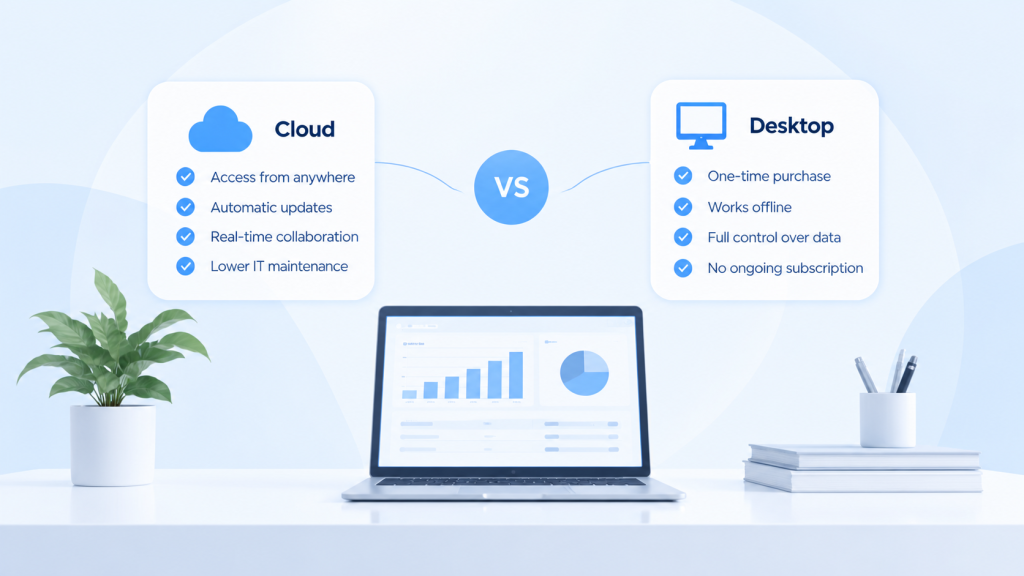
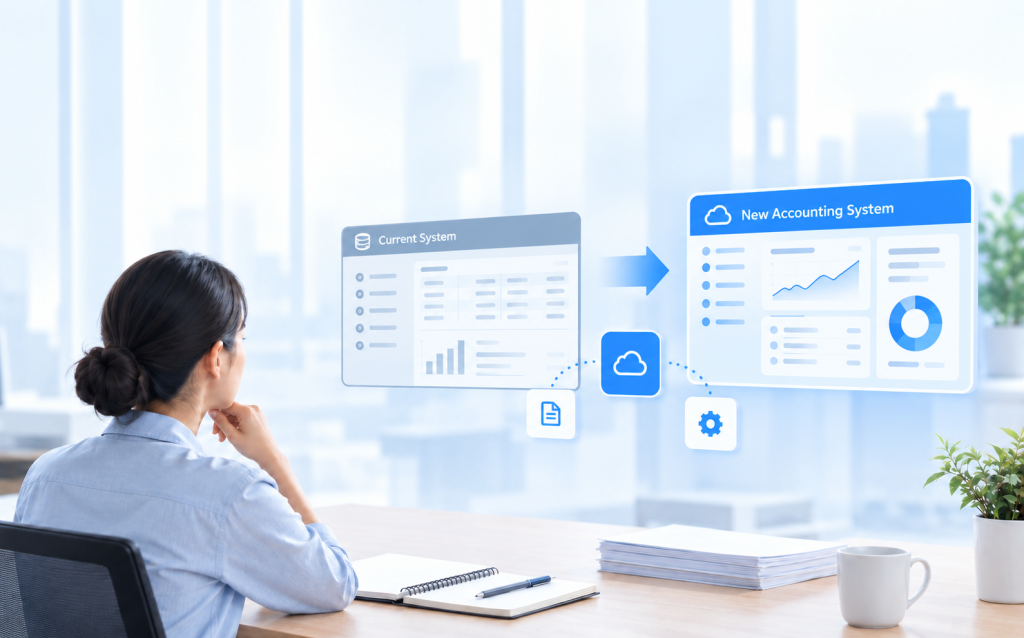
Every pain point above traces back to fragmented data, manual steps, or missing controls. Cloud accounting software reduces manual reconciliations significantly, enables real-time financial reporting, and supports multi-currency and multi-entity accounting addressing the root causes rather than just the symptoms.
Here is what makes a relevant difference:
- Combined or unified ledger. When Accounts Payable, Accounts Receivable and the General Ledger share one database, payments and receipts hit the GL instantly. There is no cross-module reconciliation to do before you even compare to the bank statement.
- Bank feeds and eBank payment files. Importing MAS-compliant bank transaction files from DBS, OCBC, UOB and Maybank directly into the system, with automatic match suggestions to invoices and auto-categorisation of recurring items like bank fees, slashes manual typing.
- Advanced journal capabilities. User-defined journal types for bank charges, FX gains and losses, and inter entity transfers each with its own numbering sequence, automatic reversal in the next period, and enforced reference fields-make tracing entries straightforward.
- Source-document attachments. Supplier invoices, remittance advices, and payment approvals attached directly to journals cut the back and forth of emailing files during review or audit.
- Instant dashboards. Up to date cash and bank balances as soon as journals post, plus configurable reconciliation reports exportable to Excel or PDF.
Digital banks received four licenses in December 2020, and annual fintech investments in Singapore stabilise at US$1.7 billion by 2025 clear signals that the ecosystem is ready for finance teams to move off spreadsheets. One accounting firm cut monthly bank reconciliation from roughly 32 hours to 20 minutes by introducing automated matching, achieving a 98% automatic match rate. Singapore has 1,700 fintech companies as of 2025, and the tools to fix slow reconciliation are already available.
How AOC Accounting Helps You Fix Slow Bank Reconciliation
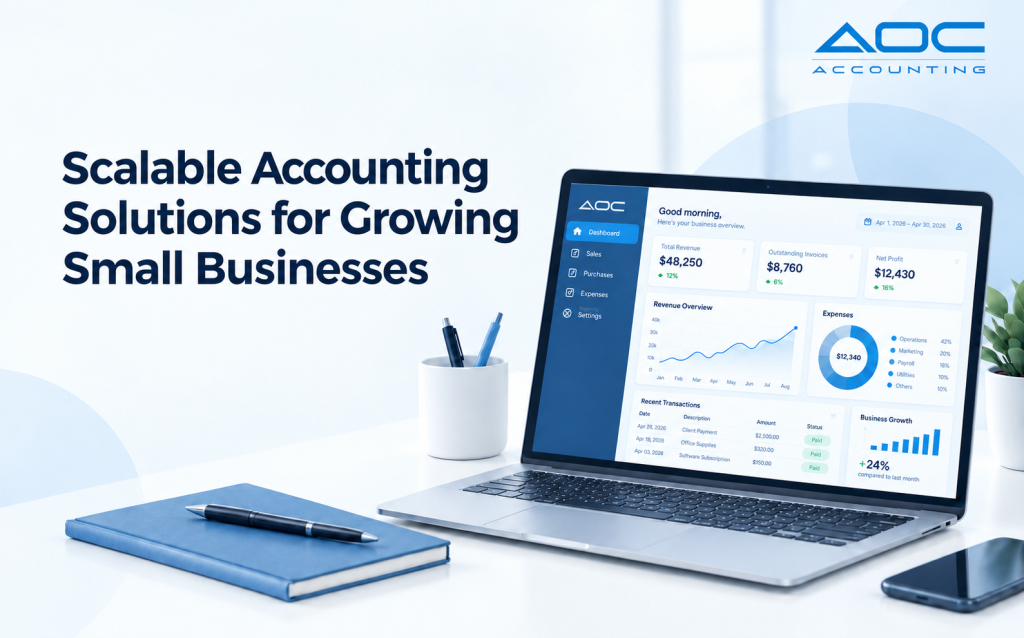
At AOC Accounting, we help finance teams in Singapore and Southeast Asia close their books faster and reduce reconciliation effort. AOC Accounting has been developed since 2015 in Singapore, and it merges Accounts Payable, Accounts Receivable, and the General Ledger into one combined ledger so there is no need to reconcile subledgers to the GL before doing bank reconciliation. Your finance team reconciles directly to the true book balance.
Our advisory and implementation team reviews your current month end and bank reconciliation process over years of accumulated experience, designs a standard checklist per bank account, and configures the system for faster reconciliation across multiple entities and currencies.
For audit and GST readiness, AOC delivers clean bank reconciliation schedules with supporting evidence attached to each journal, plus easy extraction of reports for auditors and IRAS submissions such as Form C-S accounts support. Singapore’s corporate tax rate is 17%, and having reconciliation schedules maintained and audit-ready from Day 1 removes the last-minute scramble.
Is bank reconciliation delaying your month-end close?
If your bank reconciliation routinely delays your month-end close or hides cash leaks, see how a combined-ledger system can shorten your reconciliation cycle from days to hours.
Explore Other Insights