1. Introduction to Accounting in Modern Business
What makes accounting complex, and how can a growing business reduce that accounting complexity? This article explains both for small and medium business owners, accountants and finance teams in Singapore and Southeast Asia.
At its core, accounting transforms raw financial data into structured insights that drive decision-making. It underpins strategic planning for organizations, governments, and other stakeholders such as investors, lenders, and employees. The definition extends well beyond bookkeeping – accounting includes tax accounting, financial reporting, business advisory, and systems implementation.
Here is what proper accounting delivers in practice:
- Compliance – proper bookkeeping ensures accurate tax filings and adherence to regulatory frameworks.
- Clarity – reliable records give managers and owners real-time understanding of cash flow and profitability.
- Funding – transparent financial statements build investor and lender confidence.
- Growth – data-driven insights support expansion, hiring, and market entry across Southeast Asia.

2. What Causes Accounting Complexity
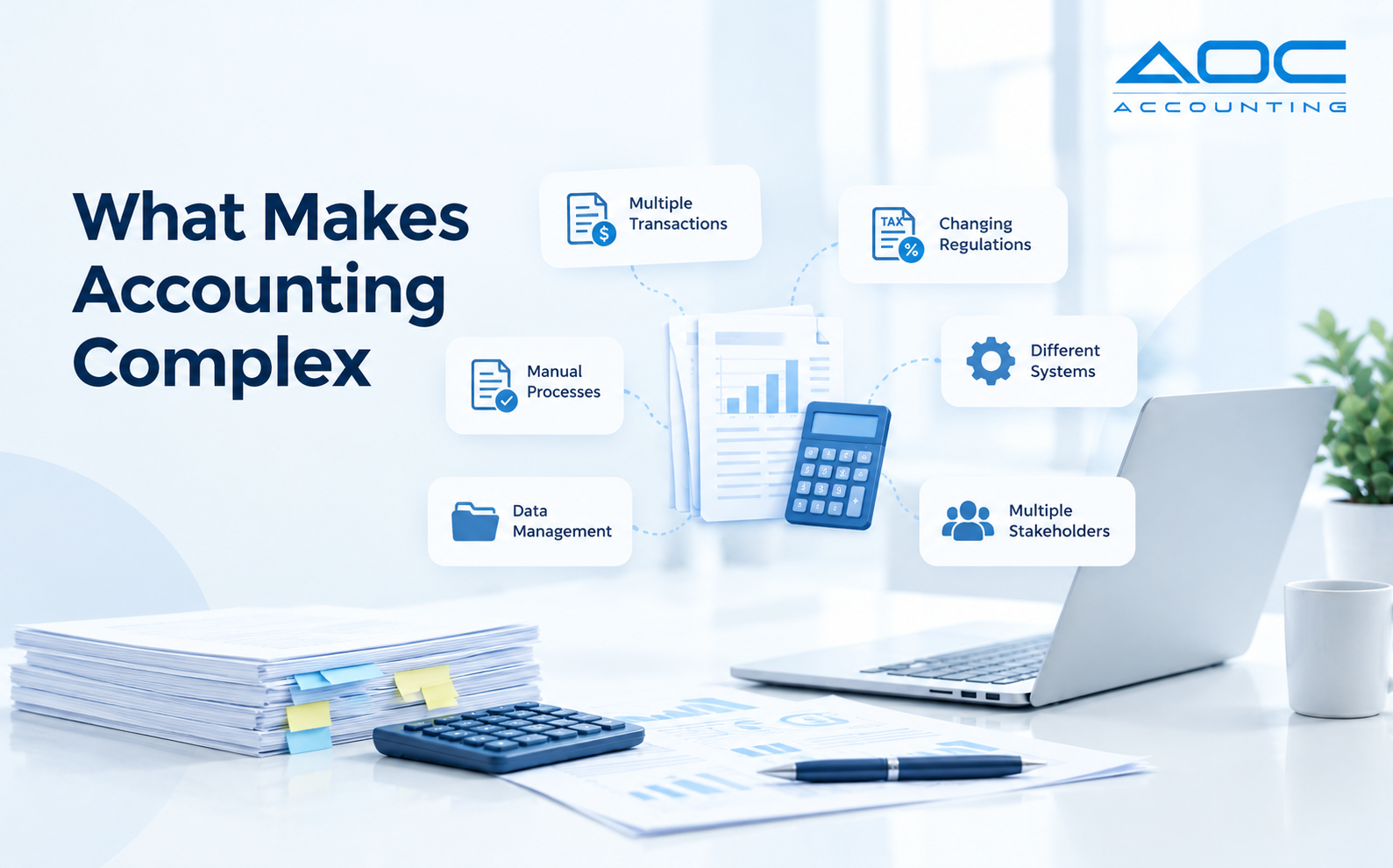
Accounting complexity is not a single issue but a layering of interacting factors that compound each other – especially for SMEs operating in a fast-changing regulatory environment like Singapore’s.
- Multiple transactions – even a small firm can process thousands of invoices, receipts, payroll runs, and cross-border payments every month. Every sale, reimbursement, and bank fee requires classification, matching, and an audit trail.
- Changing regulations – Singapore’s GST rate rose from 7% to 8% in 2023, then to 9% in 2024. BEPS 2.0 Pillar Two rules take effect for large groups from 2025, and mandatory e-invoicing via InvoiceNow is being phased in through 2031. Companies are bound by local and international standards that shift regularly.
- Manual processes – spreadsheet-based workflows, email approvals, and paper receipts increase errors, delays, and audit risk. Without automation, reconciliations become laborious and records incomplete.
- Data management – missing documents, inconsistent coding of expenses, and scattered data across email and file shares undermine the degree of accuracy that management and auditors require. In other words, poor data management means surprises at month-end.
- Different systems – POS, payroll, banking platforms, and legacy ERPs often do not talk to each other, leading to duplicate entry and reconciliation headaches across the business.
- Multiple stakeholders – owners, banks, tax authorities like IRAS, regulators like ACRA, and other stakeholders such as investors and landlords all require tailored, accurate information.

3. Core Branches of Accounting and Their Roles
Different branches of accounting serve distinct audiences and objectives. Different types of accounting exist because the information needs of users vary widely – from a CPA advising on tax to a board member reviewing group performance.
Accounting has a long history: it dates back to ancient Mesopotamia, where early records tracked grain and livestock. Arabic numerals improved accounting efficiency in medieval Europe. Luca Pacioli published the first double-entry bookkeeping system in 1494, and the Institute of Chartered Accountants in England and Wales was formed in 1880. The Enron scandal later led to the Sarbanes–Oxley Act in 2002, reshaping modern audit and compliance standards worldwide.
Today, the main branches include:
- Financial accounting – reports information to external users such as investors, creditors, and regulators, using standards like IFRS adopted in Singapore.
- Management accounting – aids internal decision-making processes through budgeting, cost analysis, and performance dashboards for managers steering daily operations.
- Tax accounting – focuses on corporate and personal income tax, GST, and international tax. In the U.S., tax accounting focuses on tax payments and returns, and U.S. tax law covers partnership, corporation, and disregarded entity forms. Corporate and personal income are taxed at varying rates, and tax accounting principles differ from generally accepted accounting principles.
- Cost accounting – determines and analyzes the cost of products and services, tracking the actual costs incurred by a business in producing a product or delivering a service.
- Auditing – verifies the accuracy of financial statements and internal controls. Its role is important even for SMEs that qualify for audit exemption but still need audit-ready records.
- Government and non-profit accounting – tracks the use of public funds, demonstrating accountability. Government and non-profit accounting tracks fund accounting for entities that do not operate to generate a profit.
- Intercompany accounting – tracks transactions between related entities, which is essential for multi-entity groups expanding across borders.
- Forensic and specialist areas – forensic accounting involves legal investigations of financial discrepancies, while niche fields like political campaign accounting serve specialized compliance needs.
4. Stakeholders in Accounting: Who Relies on the Numbers?
Stakeholders are the individuals and groups whose interests are affected by a company’s financial outcomes. Every accountant must understand who sits at the table and what content of financial reports they care about.
- Internal stakeholders – owners, board members, finance team members, and managers who rely on accounts to plan, control, and reward performance. Accountability and internal control are enhanced through systematic record-keeping.
- External stakeholders – banks, investors, suppliers, customers, and governments depend on trustworthy financial statements and tax filings. Shareholders hold ownership and equity, but many non-owners – employees, creditors – also depend on business outcomes.
- Other stakeholders – communities, industry regulators, and professional bodies monitor organizations’ transparency and compliance.
Stakeholder conflict is common. For instance, pressure to cut costs to improve the bottom line can conflict with fair employee compensation. Aggressive tax planning may boost short-term income but damage long-term reputation. These interactions and influence dynamics shape how accounting information is prepared and presented.
Institutions in academia, including Cambridge University Press and university research programmes, publish evidence on stakeholder theory and accounting’s role in society – reinforcing that accounting serves far more groups than just shareholders.
5. How Accounting Supports Real-World Business Decisions
Accounting supports informed decision-making and strategic planning for businesses. Here is how that plays out for SMEs and growing organizations in Singapore and the wider SEA region:
- Cash flow and liquidity – accurate ledgers and bank reconciliations prevent cash crunches and support loan applications, a sign of financial health to lenders.
- Profitability analysis – management accounting helps identify profitable services, loss-making customers, or unproductive branches, depending on how data is structured.
- Budgeting and forecasting – multi-year budgets and rolling forecasts guide hiring, capital investment, and market development – whether planning for growth or exit.
- Compliance and risk management – strong accounting reduces the risk of IRAS audits, penalties, fraud, and regulatory breaches across different situations.
- Multi-entity and multi-currency operations – consolidated financial reports and FX handling are essential for regional groups operating in SGD, USD, MYR, and IDR.
- Stakeholder reporting – tailored reports for lenders, investors, and other stakeholders improve trust, access to capital, and long-term success.
6. Reducing Accounting Complexity: From Manual Ledgers to Cloud Systems
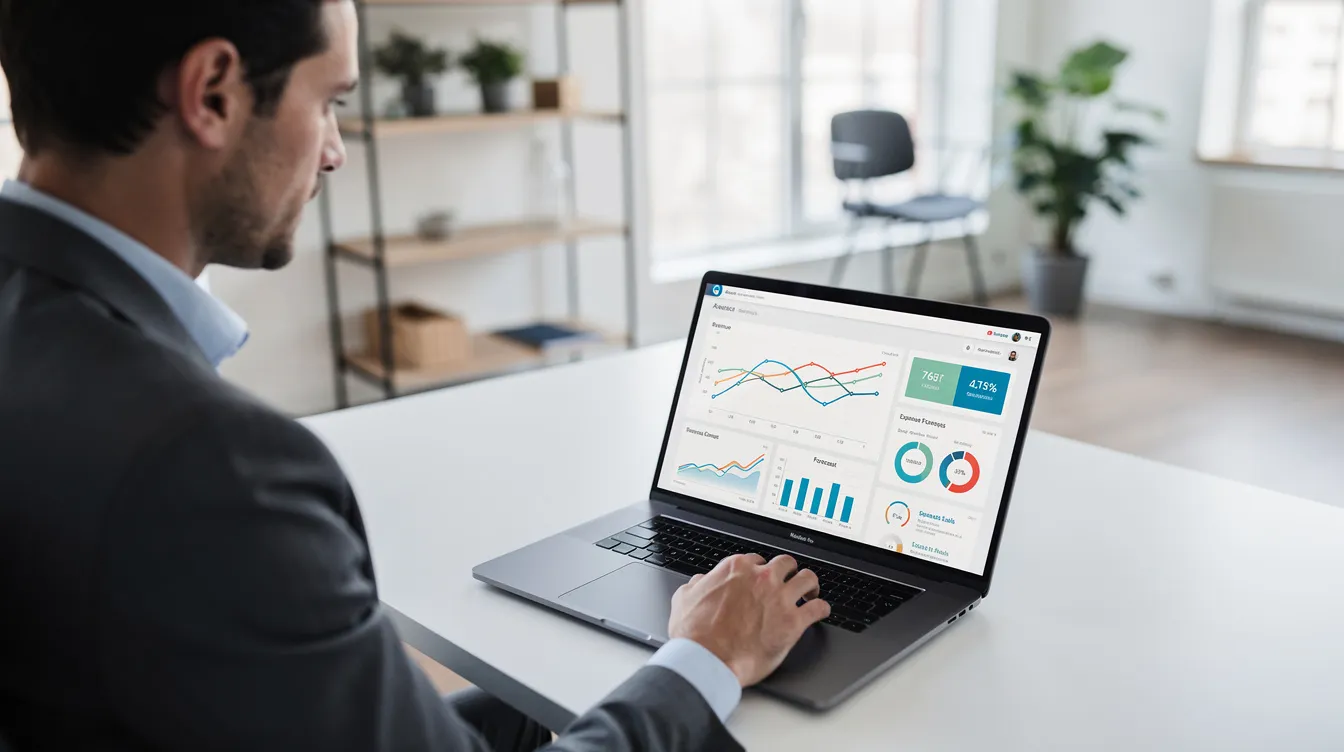
The journey from paper ledgers to spreadsheets to cloud-based accounting mirrors the evolution of the world economy itself. Each step addressed limitations of the previous process – but only cloud technology has tackled the layered complexity described above.
- Manual and spreadsheet limitations – version control issues, human errors, and lack of scalability once transaction volumes grow. You cannot save time or reduce risk with a system that depends on one person’s spreadsheet.
- Cloud accounting software – is accessible via applications or a browser, offering easy-to-use dashboards, automated bank feeds, digital document capture, and secure remote access. This lets you manage finances from a distance. Accounting software can simplify bookkeeping and tax reporting while streamlining business processes for efficiency.
- Integration across different systems – modern tools connect with POS, payroll, CRM, and payment gateways. For example, Xero integrates with third-party apps like Stripe and Vend. Xero’s ERP software centralizes financial admin, inventory, and payroll – though businesses should set up solutions that match their specific needs.
- Data management and security – backups, access controls, and audit trails are essential for compliance and stakeholder confidence. The power of real-time data changes how managers learn about and respond to business performance.
7. How AOC Accounting Simplifies Accounting Complexity
AOC Accounting is a combined ledger accounting system built by Strategic Asia, a Singapore company that has developed it since 2015, to take the structural accounting complexity out of a growing business’s books.
- Combined ledger – accounts payable, accounts receivable and the general ledger share one ledger, so there is no reconciliation between separate modules at month-end.
- Flexible journal types – each journal type carries its own numbering sequence, printed document and automatic reversal, so accruals and provisions stop being manual month-end work.
- Analysis dimensions – up to 10 dimensions per function, such as department, project or cost centre, so management reports come from the ledger rather than a parallel spreadsheet.
- Controls and audit trail – multi-level journal approval, and a source document attached to every journal.
- Multi-currency, multi-entity and consolidation – run several currencies and entities in one system and roll results up into group reports.
- Reports available immediately – standard financial reports read the ledger directly and export to PDF or Excel, with system advisory and implementation support available from the AOC team.
8. Building an Effective Accounting Framework for Your Organization
Any business – startup, SME, or growing regional group – can build a robust, scalable accounting framework. Whether you are early in your career as a business owner or leading a mature entity, the steps are the same:
- Define clear objectives – align accounting practices with strategic goals such as fundraising, expansion into SEA, or preparing for investors.
- Standardize processes – adopt written policies and documented workflows for billing, approvals, expense claims, month-end close, and document retention.
- Choose the right systems – select accounting software and add-ons that support multi-entity, multi-currency, and integration with existing business tools.
- Allocate roles and responsibilities – set clear approval limits and segregation of duties among team members to reduce fraud and error.
Turn complexity into competitive advantage
Accounting is a strategic asset, not just a compliance obligation. When you build the right framework – supported by the right technology and the right advisors – you turn complexity into competitive advantage. Learn how AOC Accounting can help you get there.