The word “second” carries surprisingly many meanings. A second denotes the position immediately following first in ranking. The base unit of time in the International System of Units is the second, and one minute equals sixty seconds. The term second can function as an adjective to modify rank or order. In music, a second is an interval between two adjacent notes. An arcsecond is a unit of angular measurement equal to 1/3600 of a degree. In informal English, seconds can mean an extra or another helping, a second can refer to an additional serving of food after finishing the first. Seconds can refer to merchandise sold at a discount due to minor imperfections. To second a motion means to formally support or endorse a proposal in meetings. But for growing businesses in Singapore and Southeast Asia, adding a second entity or currency to your accounting software is one of the most consequential moves you will make.
1. When and Why to Add a Second Entity or Currency
Over the past decade, companies across the world have increasingly sought multi-entity and multi-currency capabilities as they expand beyond their home country. In Singapore’s business environment, this need is especially common. Cloud accounting software is accessible from anywhere with internet, requires no upfront hardware costs, and automatic updates are handled by the cloud provider – making it convenient to manage operations across borders. Cloud-based accounting software offers automatic updates and scalability, and in Singapore, accounting software ensures compliance with tax regulations like GST.
Typical triggers vary depending on your growth path. You might be opening a second company in Malaysia or Indonesia, setting up a Hong Kong holding company, or starting to invoice in USD and EUR as you enter new markets from 2024 onwards. Businesses trading with companies in Australia, the U.S., or across ASEAN increasingly need multi-currency support, which is essential for global trade transactions. Multi-currency accounting simplifies financial management for businesses by eliminating manual currency market tracking in spreadsheets.

Unlike basic bookkeeping tools, modern cloud-based accounting software like AOC Accounting can handle multiple entities and currencies in one system. Accounting software automates ledger management and invoicing tasks, so your accounting process – chart of accounts, bank reconciliation, tax and GST treatment, and financial reporting – stays unified. Key benefits include:
- Consolidated reporting across entities in one click
- Faster month end close – companies report 25% to 70% reductions in close times
- Fewer spreadsheets and manual data transfers
- Better audit readiness with proper FX translation and intercompany elimination
2. Is Your Business Prepared for a Second Entity or Currency?
Before you plan your implementation, conduct a self-diagnosis. If any person on your finance team recognises these pain points, it is time to act:
Signs it is time to act
- Month end close taking more than 10 business days
- Manual FX revaluation built in Excel
- Maintaining separate Accounting Software files per company (QuickBooks Intuit provides payroll management and inventory tracking features, but not true multi-entity consolidation)
- Intercompany balances reconciled by hand
- No group level view of cash or performance without manual collation
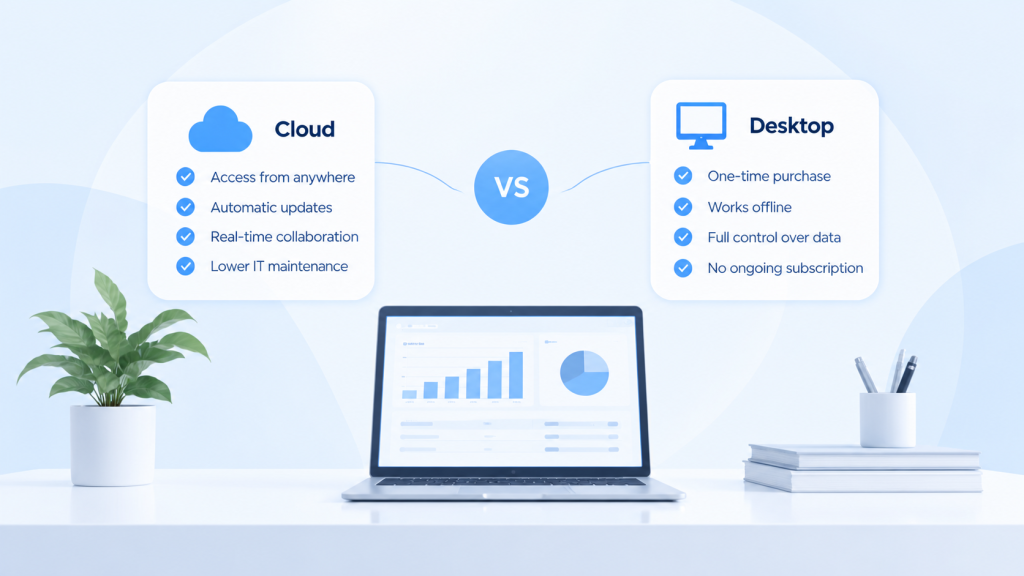
When evaluating existing accounting tools, check whether your software supports combined ledgers, multi-entity structures, and multi-currency without extra modules. Scalability ensures software meets growing business needs over time, and user-friendly design simplifies the learning curve for new software. Integration capabilities allow seamless connection with other business applications, a crucial consideration. Desktop software requires a one time purchase and operates offline, but functionality relies on a stable internet connection for cloud systems, and subscription fees can accumulate over time. Trial periods help evaluate software suitability before purchase if you are comparing systems.
3. Designing Your Multi-Entity and Multi-Currency Structure
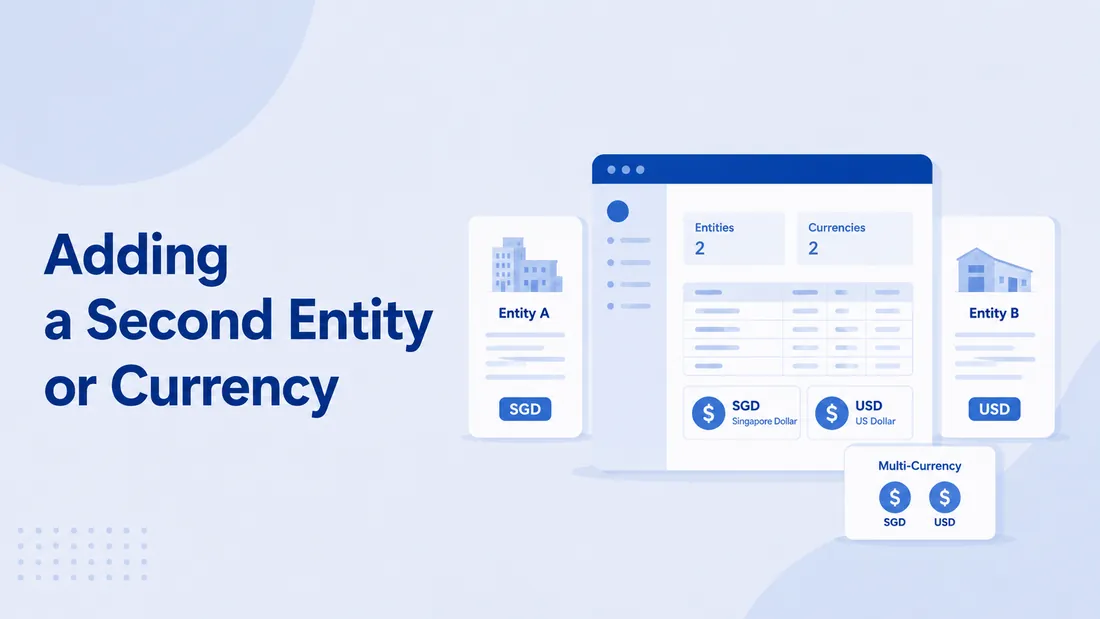
Take the example of a Singapore parent with operating entities in Malaysia and Thailand. You need to decide which entities to set up separately: legal companies (Pte Ltd, Sdn Bhd, Thai Co. Ltd), branches registered with ACRA, dormant entities, or SPVs. Each carries a different degree of reporting complexity.
Functional currency per entity is the foundation: SGD for Singapore, MYR for Malaysia, THB for Thailand. Revenue, expenses, and balances are recorded in the functional currency. The group reporting currency often SGD is used to express consolidated financial statements, translating foreign operations at closing or average rates. Currency fluctuations create translation adjustments that flow into equity reserves under SFRS(I).
Design a shared chart of accounts with common account codes for revenue, COGS, and intercompany balances, allowing local variations for statutory contributions (CPF in Singapore, EPF in Malaysia). Competitors like NetSuite offer robust multi-currency support for enterprises, Volopay supports multi-currency transactions for international businesses, and Jaz accounting software automatically handles currency conversions. AOC Accounting’s advantage is its combined ledger with up to 10 analysis dimensions – you can tag transactions by entity, department, cost centre, and project without maintaining fully separate ledgers.
4. Configuring the Second Entity in AOC Accounting
Setting up a second entity in AOC Accounting follows a logical sequence:
- Create the legal entity record – enter legal name, registration number (Singapore UEN or Malaysia SSM number), address, and financial year-end date such as 31 December. Data security is enhanced by reputable cloud providers, so your financial information remains protected.
- Set functional and reporting currencies – assign the entity’s functional currency and define the group reporting currency for consolidated reports. Configure local tax settings: GST for Singapore, SST or VAT for regional entities.
- Clone or map the chart of accounts – start from the first entity’s accounts and specify which are shared (revenue, COGS, intercompany) and which are entity-specific (local payroll, statutory contributions). Sharing a unified chart of accounts streamlines reporting and eliminates redundancy.
- Configure approval workflows – use AOC Accounting’s multi-level journal approval to mirror local sign-off limits per entity. For example, set a SGD 5,000 threshold in Singapore and the MYR equivalent in Malaysia, with designated members responsible for each level.
5. Enabling and Managing a Second Currency
When your operations expand for instance, paying for Facebook advertising in USD, or receiving receipts from suppliers in EUR you need a second currency activated in your systems.
Understand the difference between transaction currency (the currency on an invoice), functional currency (the entity’s primary currency), and group reporting currency. For reference: if your Malaysian entity invoices a U.S. client USD 1,000 on a date when the rate is 4.40 MYR/USD, the money is recorded as MYR 4,400 in the entity’s books. At month end, open balances are revalued at the closing rate.

To add a new currency: choose the ISO code (USD, EUR, MYR), set default exchange rate sources, and define rounding rules. AOC Accounting can import FX rate feeds or accept periodic manual uploads. Configure bank accounts, customer accounts, and supplier accounts to support the second currency for accurate AR/AP aging and bank reconciliation. The speed at which banks process multi-currency transactions is also a factor ensure your banking partners support the range of currencies you need.
6. Data Migration and Opening Balances for the New Entity or Currency
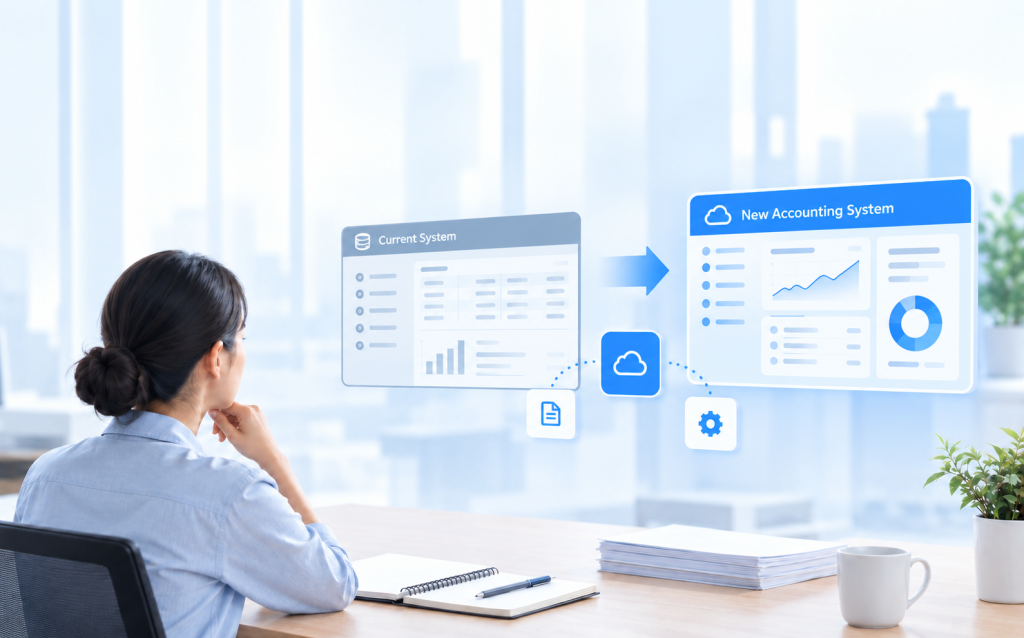
Advance planning is essential. Choose a clean changeover date, ideally the start of a new financial year such as 1 January 2027. Data migration transfers existing financial data to new software and includes historical records and transaction history. Accurate data migration ensures consistent financial records across entities.
Steps to follow:
- Extract the trial balance by entity from legacy systems or spreadsheets
- List outstanding AR/AP by customer and supplier in each currency
- Record bank balances in both functional and foreign currencies
- Reconcile retained earnings and any unrecorded FX gains or losses
Backup data before major changes to prevent loss. Use AOC Accounting’s Excel import tools to load journals, customer lists, and supplier lists. Thorough testing is essential before completing data migration always test in a sandbox environment first. Create a detailed migration checklist and have an external accountant or AOC Accounting’s implementation partner review mappings before go live. This hands on experience with your specific data structure prevents costly errors.
7. Running Day-to-Day Accounting with Multiple Entities and Currencies
Once configuration is complete, the focus shifts to smooth daily accounting tasks. Common processes change: issuing invoices now requires selecting the correct entity and currency; recording supplier bills must capture the right account and currency; bank reconciliation covers multiple accounts across entities. AOC Accounting’s combined ledger eliminates the need for separate AP, AR, and GL reconciliation, which can dramatically speed up the month end close.
Intercompany transactions for example, management service fees from Singapore HQ to an Indonesia entity – require mirrored entries and clear analysis dimensions. In relation to these, the best accounting software will automatically create matching intercompany balances for elimination during consolidation.
Periodic accounting tasks include FX revaluation at month-end, consolidation of multi-entity financial statements in SGD, and preparing GST submission and corporate tax filings per entity (ECI and Form C-S). Each entity must have prepared financial statements that meet local statutory requirements. Companies that conduct operations in multiple jurisdictions must keep quality records and documents attached to every journal for audit readiness.
Ready to streamline your multi-entity and multi-currency accounting?
Request a demo of AOC Accounting to see how the combined ledger works across entities, and have the team review your current setup with a practical migration plan.
Explore Other Insights